
FROM SACRED TREE TO CHOCOLATE BAR
The history of cacao: from ancient American civilizations to European chocolate
An NH Superfoods journey through the origins of one of history’s most treasured foods
The Origin: A Gift from the Amazon Rainforest
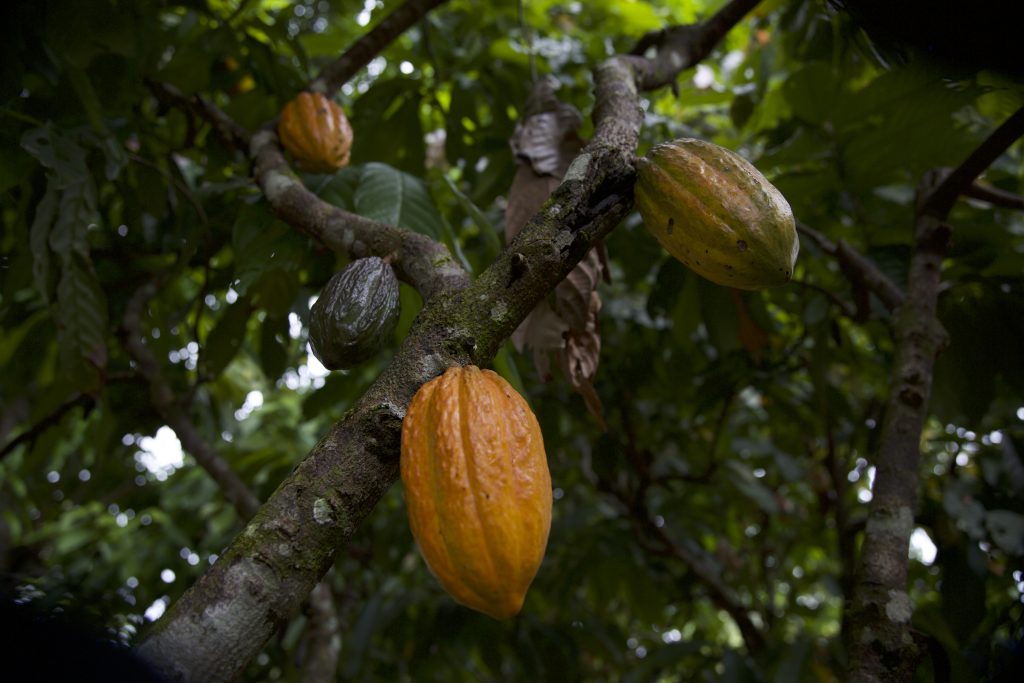
Cacao (Theobroma cacao, «food of the gods» in Greek) is native to the tropical basins of the Amazon and Orinoco rivers in South America, where the tree grew wild long before any civilization domesticated it. From these rainforests, its seeds traveled likely through exchange between people northward into Mesoamerica, where cacao would reach its greatest cultural splendor.
The oldest archaeological evidence of human cacao consumption does not come from Mexico, but from further south: at the Santa Ana-La Florida site, in the Zamora Chinchipe province of Ecuador, remains have been found documenting ceremonial cacao use more than 5,000 years ago, making the Ecuadorian Upper Amazon one of the oldest known settings for the relationship between humans and this plant.
It was in Mesoamerica, however, where cacao was systematically domesticated and where the culture we now associate with chocolate was born. The Olmecs, considered the «mother culture» of the region, cultivated the tree around 1500 BCE and were likely the first to prepare a drink from its ground seeds, used both in daily life and in ritual.
The Mesoamerican Civilizations: Food, Ritual, and Currency
The Maya: The Drink of the Gods
For the Maya people, settled in what is now southeastern Mexico and Guatemala, cacao was a sacred plant. Their drink, made from roasted, ground beans, water, and spices such as chili or vanilla, was called «xocolatl» and was offered at religious ceremonies, weddings, banquets, and rites of passage, reserved above all for nobility and priests. Maya vessels, many decorated with glyphs explicitly naming cacao, show scenes of the drink being frothed poured from one vessel to another from a height to achieve the characteristic foam considered its most prized quality.
In Guatemala, the heartland of Maya territory, cacao also served an economic function: its beans circulated as a unit of exchange in local markets long before Europeans reached the continent.
The Aztecs in Mexico: Wealth, Power, and Money
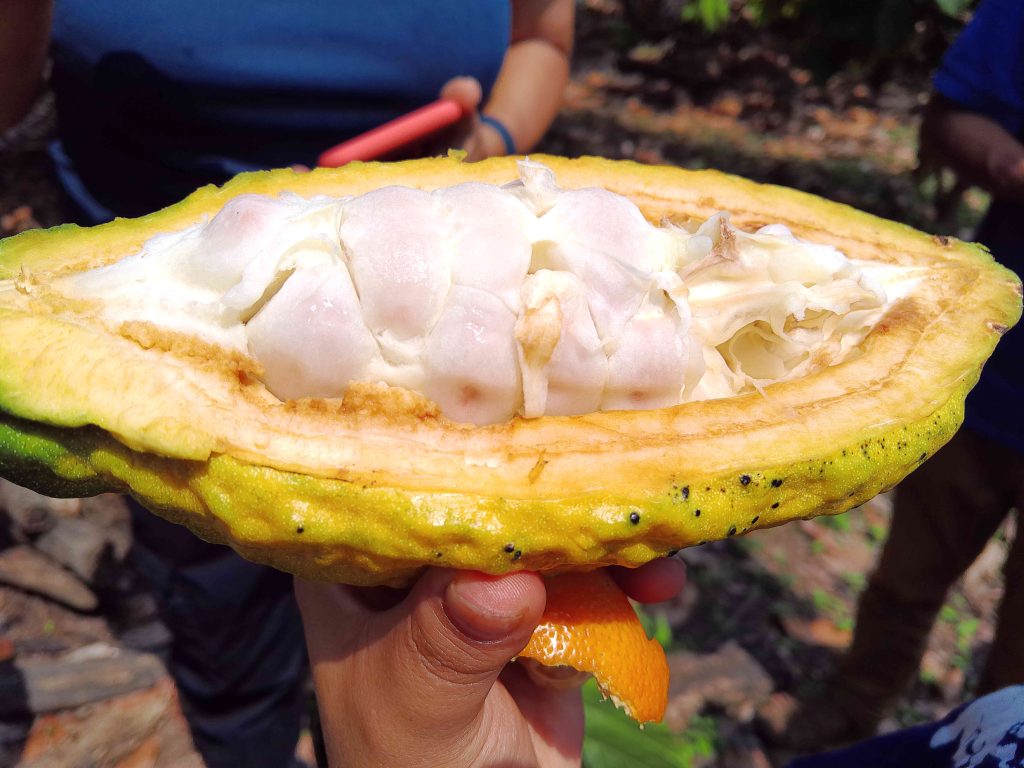
The Aztecs inherited and expanded the use of cacao already practiced by earlier Mesoamerican peoples. Since the tree did not grow on the central highlands where their empire was centered, cacao had to arrive as tribute or trade goods from the warmer lands to the south, which reinforced its status as a luxury good. Emperor Moctezuma II was famous for drinking large quantities of « xocolatl» daily, and cacao was believed to be an aphrodisiac and to strengthen warriors.
Beyond its ceremonial value, cacao functioned as true currency within the Aztec economy, with very specific everyday exchange rates:
- A rabbit could be bought for roughly four to ten cacao beans.
- An avocado was worth about three beans.
- A slave could cost around one hundred cacao pods.
This dual condition — sacred food and monetary unit — made cacao one of the most versatile and coveted goods in Mesoamerica, and its use as a means of payment continued even after the Spanish conquest, coexisting for decades with the minted coinage of the Viceroyalty of New Spain.
The Amazon: The Cradle of Fine-Flavor Cacao
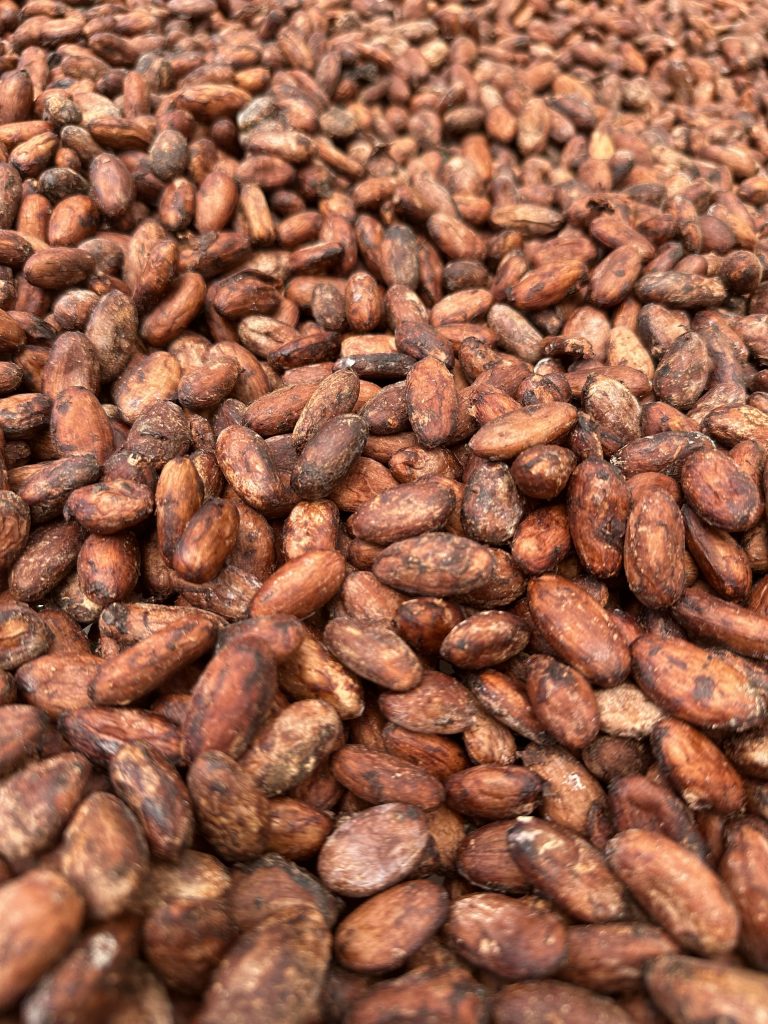
While Mesoamerica was developing the ritual and monetary uses of cacao, in the Amazon rainforest the region that today spans parts of Peru, Ecuador, and Brazil indigenous peoples had long cultivated and consumed cacao that grew wild in its original home. Genetic studies confirm that cacao itself was first domesticated in the upper Amazon basin, with human use dating back more than five millennia, well before it ever reached Mesoamerica.
Among the Amazonian peoples who have preserved this deep relationship with cacao are the Asháninka, an indigenous nation of the Peruvian rainforest, recognizable by their traditional reddish-orange cushma garments. For the Asháninka and neighboring Amazonian communities, cacao has never been a commodity discovered by outsiders it has always been part of the forest’s own abundance, harvested, fermented, and consumed according to knowledge passed down across generations.
It is with these Amazonian communities that NH Superfoods builds its direct relationships today, working alongside families who continue to cultivate cacao within the rainforest ecosystem using practices rooted in that ancestral knowledge.
Crossing the Atlantic: From America to the Spanish Court
The first European to encounter cacao was Christopher Columbus, who in 1502, during his fourth voyage, received a shipment of beans off the coast of what is now Honduras, without understanding their true value at the time. It would take almost twenty years before Hernán Cortés arrived in Tabasco in 1519 and was received by envoys of Moctezuma II, who according to tradition mistook him for the returning god Quetzalcóatl and offered him chocolate as a ceremonial drink.
Cortés understood the economic and strategic value of cacao, both as a luxury good and as currency, and upon returning to Spain around 1527-1528, he brought cacao beans along with the utensils and the indigenous recipe for preparing it. Spain thus became cacao’s gateway into Europe and, for nearly a century, kept the trade a closely guarded royal monopoly.
The original Mesoamerican drink bitter, spiced with chili, and frothy held little appeal for European palates. It was in Spanish convents and monasteries, such as the Monastery of Piedra in Zaragoza, where around 1534 the recipe began to be adapted: chili was replaced with cane sugar, and cinnamon and vanilla were added, giving rise to the sweet, hot beverage we now associate with chocolate.
An Elite Product: Luxury, Court, and State Secret
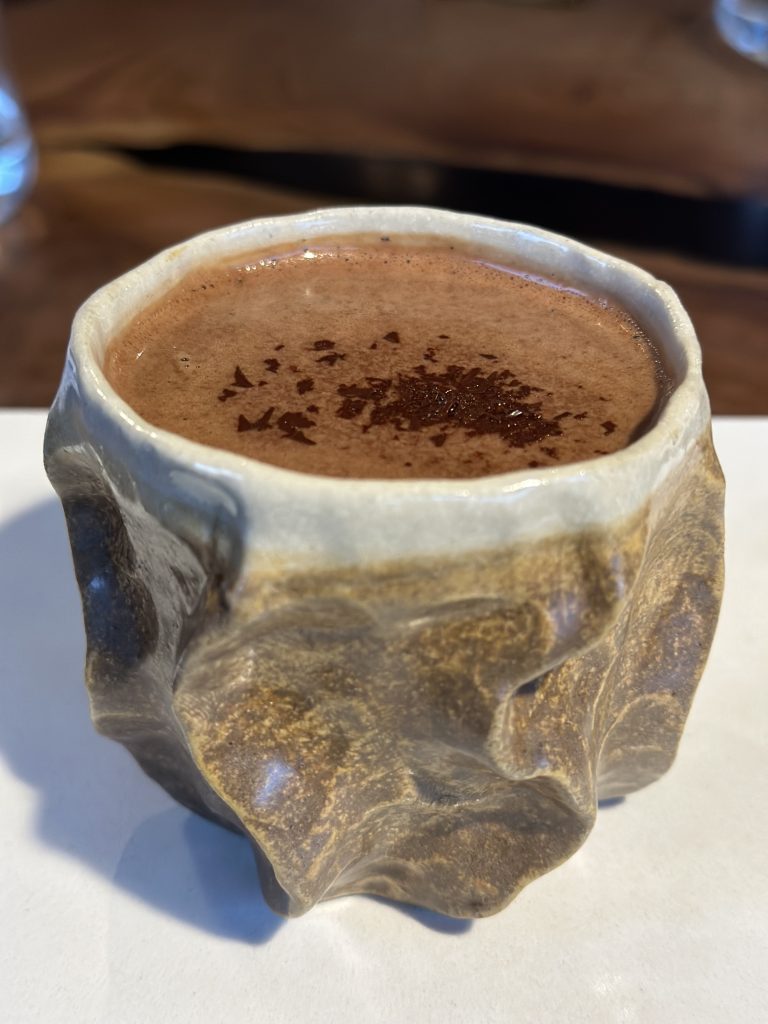
Throughout the sixteenth century and much of the seventeenth, chocolate was an almost exclusive privilege of royalty, the aristocracy, and the high clergy. Its high cost a result of Spain’s monopoly on transport and limited production made it a symbol of social status, much like coffee or the finest spices. Drinking chocolate from silver jugs, sweetened with imported sugar and spices, was a way of displaying wealth and refinement.
Spain’s monopoly broke down gradually through royal marriages and diplomacy rather than trade. In 1615, chocolate reached France through Anne of Austria, daughter of the Spanish king, on the occasion of her marriage to Louis XIII; shortly after, in 1660, another Spanish princess, Maria Theresa, introduced it to the French court upon marrying Louis XIV. Similarly, in 1711 Charles VI moved his court from Madrid to Vienna, bringing with him the Spanish custom of drinking chocolate, which soon became fashionable among Austrian aristocracy.
Chocolate became a symbol of status and luxury in seventeenth-century Europe. — History of chocolate in the European courts
During the seventeenth century, England, France, and the Netherlands saw the rise of the first «chocolate houses» exclusive establishments, forerunners of today’s tea salons, where the aristocracy and wealthy merchant class gathered to socialize over this costly drink. One of the earliest on record opened in London in 1657.
Taxes, Tariffs, and Chocolate’s Journey to the People
Precisely because it was a luxury item, chocolate became subject to heavy taxation in several European countries, particularly England, where for much of the eighteenth century cacao and chocolate carried steep import tariffs that kept it out of reach for most of the population and encouraged significant smuggling.
The combination of lower production costs, expanding colonial cacao and sugar plantations, and the gradual reduction of these tariffs throughout the eighteenth and early nineteenth centuries allowed chocolate to move beyond the royal court. Little by little, the drink still prepared by hand and served hot became accessible to the urban middle classes, first in Spain and then across the rest of Europe.
From Drink to Bar: The Birth of Solid Chocolate
For nearly three hundred years, from its arrival in Spain until well into the nineteenth century, chocolate was consumed exclusively as a beverage. The decisive step toward the solid chocolate we know today came with the Industrial Revolution and a series of technical innovations concentrated within a few decades:
- 1815 — Dutchman Coenraad Johannes van Houten opens one of Europe’s first mechanized chocolate factories, in Amsterdam.
- 1828 — Van Houten patents a hydraulic press capable of separating cacao butter from the mass, giving rise to defatted cocoa powder (later known as the «dutching» process).
- 1847 — British firm J. S. Fry & Sons, in Bristol, combines cocoa powder, melted cacao butter, and sugar into a moldable paste, creating the first solid chocolate bar in history.
- 1849 — Fry & Sons commercially launches its bar in Birmingham under the name «Chocolat Délicieux à Manger» («delicious chocolate to eat»), marking the birth of chocolate as a candy, rather than merely a drink.
This innovation completely transformed the product: from a hot infusion reserved for the upper classes, chocolate became a solid, portable food and, over time, increasingly accessible to all. Decades later came further milestones, Swiss maker Daniel Peter’s milk chocolate in 1875 and Rodolphe Lindt’s conching process in 1879 which refined texture and flavor and laid the foundations of the modern chocolate industry.

Timeline at a Glance
| ~3500 BCE | Earliest evidence of cacao consumption in the Upper Amazon (Ecuador). |
| ~1500 BCE | Domestication and cultivation of cacao by the Olmecs in Mesoamerica. |
| Maya era | Cacao becomes a sacred drink («xocolatl») and a means of payment. |
| Aztec era | Cacao is established as official currency of exchange in pre-Hispanic Mexico. |
| 1502 | Christopher Columbus has the first European contact with cacao. |
| 1519 | Hernán Cortés encounters chocolate at the court of Moctezuma II, in Mexico. |
| 1527 | Cortés brings cacao to the Spanish court. |
| 1534 | In Zaragoza, Spain, the recipe is adapted with sugar, cinnamon, and vanilla. |
| 1615 / 1660 | Chocolate reaches the French court through two Spanish princesses. |
| 17th-18th c. | Chocolate is a luxury reserved for royalty and aristocracy; heavy taxes limit popular access. |
| 18th-19th c. | Falling tariffs and larger-scale production bring chocolate to the general population. |
| 1828 | Van Houten invents the hydraulic press and cocoa powder. |
| 1847 | J. S. Fry & Sons creates the first solid chocolate bar, in England. |
A Legacy NH Superfoods Honors
From the sacred tree of the Amazon to the industrial English chocolate bar, the history of cacao is also a history of encounters sometimes harmonious, sometimes unequal between cultures, flavors, and economies. At NH Superfoods, we work directly with Amazonian communities, Asháninka families, who keep alive ancestral cultivation practices passed down through generations within the rainforest itself. Honoring that legacy, through organic and Fair Trade certifications, is our way of ensuring that this heritage continues to grow with the same respect for the land and for the hands that cultivate it.