Nickel in Agriculture and Food: What EU Importers and Food Operators Need to Know
Nickel is not a new substance in the food chain. It is a naturally occurring metal found in the Earth’s crust, soils, water and plants. But in 2024, it became much more relevant for companies exporting or placing food products on the EU market.
Through Commission Regulation (EU) 2024/1987, the European Union introduced new Maximum Levels (MLs) for nickel in selected foodstuffs, amending Regulation (EU) 2023/915 on contaminants in food. These new rules are important for producers, processors, exporters and importers of agricultural products, especially those working with cereals, cocoa and chocolate products, nuts, pulses, oilseeds and other plant-based ingredients.
The key point is simple: nickel can occur naturally, but when levels are too high, it becomes a food safety concern.
What is nickel?
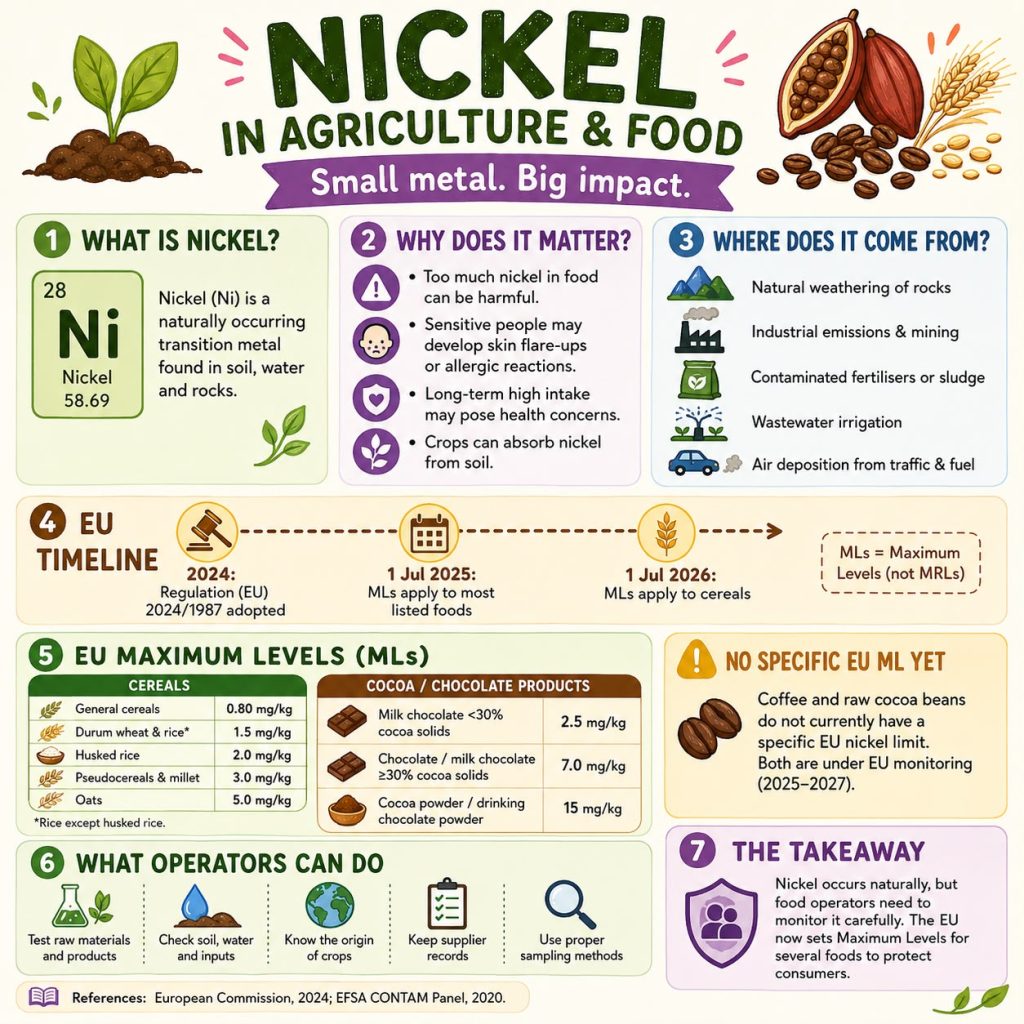
Nickel, represented by the chemical symbol Ni, is a metallic element with atomic number 28. Chemically, it is classified as a transition metal. In food safety and environmental discussions, it is often grouped with “metals and other elements” because of its potential toxicity at higher exposure levels.
Nickel is widespread in the environment. It can enter food through natural processes, such as the weathering of rocks and minerals, but also through human activity. The European Commission notes that nickel in food may come from both natural and anthropogenic sources (European Commission, 2024a).
For agriculture, this matters because crops can absorb nickel from the soil. The amount taken up depends on several factors, including the natural nickel content of the soil, soil pH, organic matter, fertiliser use, irrigation water quality and proximity to industrial activity.
How does nickel contaminate agricultural soils?
Nickel contamination in agriculture usually comes from a combination of natural background levels and external inputs. Common sources include:
- natural weathering of nickel-containing rocks;
- industrial emissions and atmospheric deposition;
- mining, smelting and metal-processing activities;
- use of contaminated fertilizers or soil amendments;
- sewage sludge applied to agricultural land;
- wastewater or polluted irrigation water;
- traffic-related emissions and fuel combustion.
This does not mean every soil with nickel is “contaminated.” Nickel is naturally present in many soils. The problem begins when concentrations increase to levels that can raise crop uptake and, eventually, dietary exposure.
For producers, this makes soil and raw-material monitoring increasingly important. A crop may comply one year and present elevated levels the next if the origin, soil conditions or agricultural practices change.
Health implications: why does nickel matter?
Nickel is relevant because dietary exposure can affect sensitive consumers and, at higher long-term intake levels, broader population groups.
The European Food Safety Authority identified two main health concerns. First, chronic oral exposure has been associated with reproductive and developmental effects, with pregnancy loss identified as the critical chronic effect in EFSA’s risk assessment. Second, acute oral exposure can trigger eczematous flare-up reactions in nickel-sensitised individuals (EFSA CONTAM Panel, 2020).
EFSA established a tolerable daily intake (TDI) of 13 µg/kg body weight per day and concluded that this level could be exceeded in toddlers, children aged between 36 months and 10 years and, in some cases, infants. EFSA also noted that around 15% of the population may be nickel-sensitised, meaning that acute reactions are a real concern for a significant consumer group (EFSA CONTAM Panel, 2020).
This is the regulatory logic behind the EU’s new limits: nickel is common, but exposure must be controlled.
The EU regulatory timeline
The regulatory framework is recent and should be read carefully.
25 April 2023: The EU adopted Commission Regulation (EU) 2023/915, which sets Maximum Levels for certain contaminants in food and repealed the older Regulation (EC) No 1881/2006 (European Commission, 2023).
22 March 2024: The European Commission adopted Recommendation (EU) 2024/907, asking Member States and food business operators to monitor nickel in food during 2025, 2026 and 2027. The monitoring list includes, among others, cocoa beans, chocolate, cereal-based products, coffee, tea, vegetables, seaweed, oilseeds, soy-based products, pulses, nuts, fish and seafood (European Commission, 2024b).
30 July 2024: The Commission adopted Regulation (EU) 2024/1987, amending Regulation (EU) 2023/915 to introduce Maximum Levels for nickel in certain foodstuffs (European Commission, 2024a).
1 July 2025: The new nickel Maximum Levels apply to most listed food categories, except the cereal categories listed under points 3.6.11.1 to 3.6.11.5.
1 July 2026: The Maximum Levels for cereals apply. This extra year gives operators more time to adapt, because cereal supply chains are large, seasonal and often based on long-term contracts.
Food lawfully placed on the EU market before the relevant application dates may remain on the market until its minimum durability date or use-by date, provided it complied with the rules applicable at the time (European Commission, 2024a).
Nickel Maximum Levels for cereals
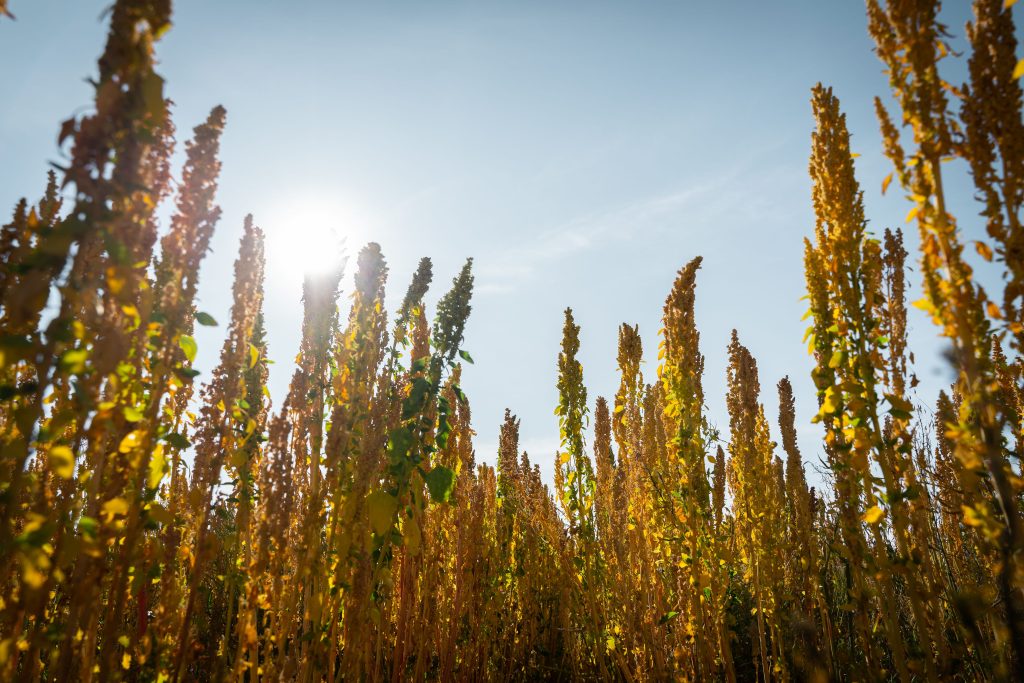
For cereals, the EU rules apply from 1 July 2026. The limits are not the same for all cereals.
The main cereal limits are:
| Product category | Nickel Maximum Level |
| Cereals, except durum wheat, rice, pseudo cereals, millet and oats | 0.80 mg/kg |
| Durum wheat and rice, except husked rice | 1.5 mg/kg |
| Husked rice | 2.0 mg/kg |
| Pseudo cereals and millet | 3.0 mg/kg |
| Oats | 5.0 mg/kg |
For oats, the level applies to oat grains without the inedible husk. For oats with the inedible husk, a processing factor of 1.5 applies, resulting in a level of 7.5 mg/kg (European Commission, 2024a).
These values matter for exporters of grains and cereal ingredients because compliance will depend not only on the final product but also on crop origin, soil conditions and handling practices.
Nickel limits for cocoa and chocolate products
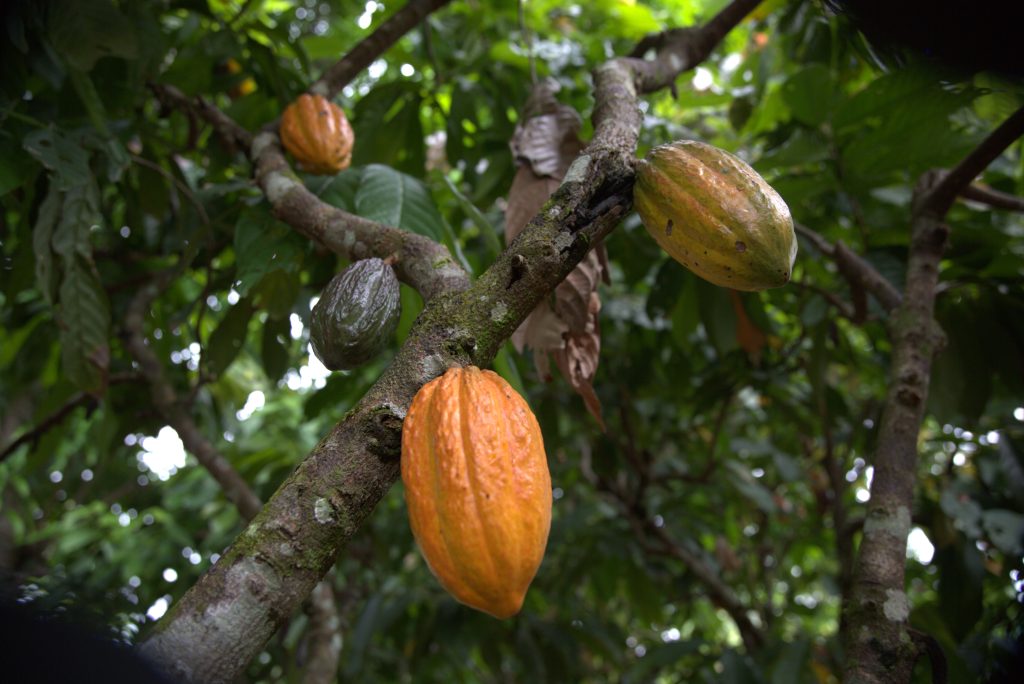
A critical correction is needed here: Regulation (EU) 2024/1987 does not set a Maximum Level for raw cocoa beans. It sets limits for specific cocoa and chocolate products.
The main limits are:
| Product category | Nickel Maximum Level |
| Milk chocolate with less than 30% total dry cocoa solids | 2.5 mg/kg |
| Milk chocolate with at least 30% total dry cocoa solids and chocolate | 7.0 mg/kg |
| Cocoa powder and fat-reduced cocoa powder placed on the market for the final consumer, or used as an ingredient in sweetened cocoa powder or drinking chocolate | 15 mg/kg |
These limits apply from 1 July 2025 (European Commission, 2024a).
For cocoa operators, the absence of a specific ML for raw cocoa beans does not mean the issue can be ignored. Cocoa beans are included in the EU’s 2025–2027 monitoring programme, which means authorities and operators are expected to collect more occurrence data. That data may inform future regulatory decisions (European Commission, 2024b).
What about coffee?
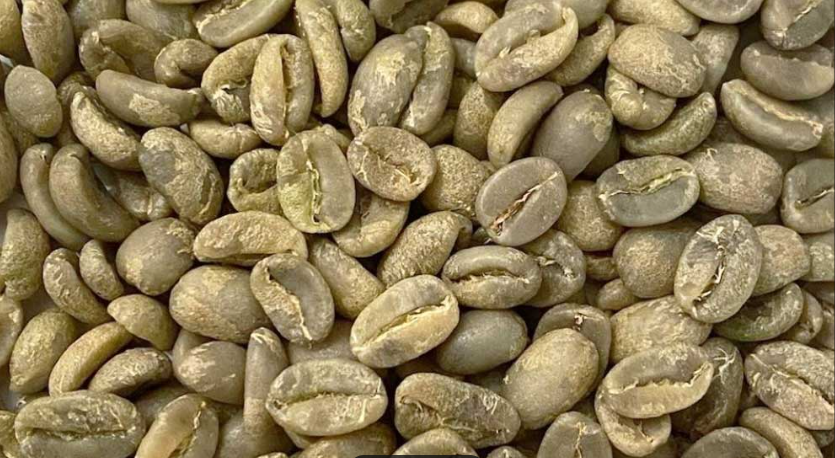
There is currently no specific EU Maximum Level for nickel in coffee beans, roasted coffee or coffee products under Regulation (EU) 2024/1987.
This point should not be blurred. Coffee appears in Commission Recommendation (EU) 2024/907, which asks Member States and food business operators to monitor nickel in coffee during 2025–2027. Monitoring is not the same as a legal Maximum Level. It means the EU wants more data before deciding whether further regulatory action is needed (European Commission, 2024b).
For coffee exporters, the practical message is still clear: start gathering data now. Waiting until a binding limit appears would be a weak compliance strategy.
Preventive measures for operators
Food business operators should treat nickel as part of their contaminant-control programme. The most useful measures include:
- Know the origin of raw materials. Nickel levels can vary significantly by region, soil type and agricultural practice.
- Test raw materials and finished products. This is especially important for cereals, cocoa powder, chocolate products, nuts, pulses, oilseeds and monitored commodities such as coffee.
- Assess soil and agricultural inputs. Fertilisers, amendments, sewage sludge and irrigation water can contribute to nickel levels.
- Control suppliers. Contracts and specifications should include contaminant expectations, especially for commodities covered by the EU limits.
- Use recognised sampling and analytical methods. The Commission recommends that sampling and analysis follow the requirements laid down in Regulation (EC) No 333/2007 (European Commission, 2024b).
- Keep documentation. Traceability, certificates of analysis and supplier declarations will be essential in case of official controls or customer audits.
Final takeaway
Nickel is natural, but “natural” does not mean irrelevant. The EU has now moved from monitoring and risk assessment to binding Maximum Levels for several food categories.
For companies exporting agricultural products to the EU, the most important actions are to stop using the wrong terminology, understand which products are actually covered, and begin testing early.
Nickel is not regulated as a pesticide residue. It is regulated as a food contaminant. That means the correct term is Maximum Level (ML), not MRL.
The most urgent categories are cereals, cocoa and chocolate products, and plant-based raw materials with known accumulation risks. Coffee and raw cocoa beans do not yet have specific Maximum Levels, but both are under EU monitoring. That is often the first step before future limits are considered.
References
European Commission. (2023). Commission Regulation (EU) 2023/915 of 25 April 2023 on maximum levels for certain contaminants in food and repealing Regulation (EC) No 1881/2006.
European Commission. (2024a). Commission Regulation (EU) 2024/1987 of 30 July 2024 amending Regulation (EU) 2023/915 as regards maximum levels of nickel in certain foodstuffs.
European Commission. (2024b). Commission Recommendation (EU) 2024/907 of 22 March 2024 on the monitoring of nickel in food.
EFSA CONTAM Panel. (2020). Scientific Opinion on an update of the risk assessment of nickel in food and drinking water. EFSA Journal, 18(11), 6268.
EFSA CONTAM Panel. (2015). Scientific Opinion on the risks to public health related to the presence of nickel in food and drinking water. EFSA Journal, 13(2), 4002.